Your team asks for time to move the code for different parts of the product into a shared repository, a place that stores code and its change history. You have to decide whether to spend that time on the move instead of new features, while the benefit remains unclear. What should you tell the developers?
A repository containing several distinct projects or independently developed parts of a product is called a monorepo. It helps the team prepare and review related changes together. To decide, you need a concrete task, a cost estimate, and clarity on who should see the code.
A recent task is a useful starting point
Take a hypothetical class-booking service. Customers should be able to move a booking to another time. One team adds a date selector to the screen; another changes the server-side code that saves the booking. The customer sees the result: they choose a time and their booking changes.
With the code stored separately, the teams prepare two changes in different repositories. Suppose a reviewer approved the screen with the date selector without noticing that the server cannot yet handle a rescheduling request. Only when both parts are put together does the problem become apparent: the customer presses the button, but the booking stays at the original time.
In a monorepo, both parts can be presented as one change. During code review, another developer examines the proposed change and leaves comments. They can see both the date selection and the saving of the new time, and check that they work together.
Ask the team to walk through a recent task on your product in the same way. What had to change together, and which work would the move have made easier? As a business leader, you need the team’s explanation. You do not need to read the code.
Who should be able to see the code
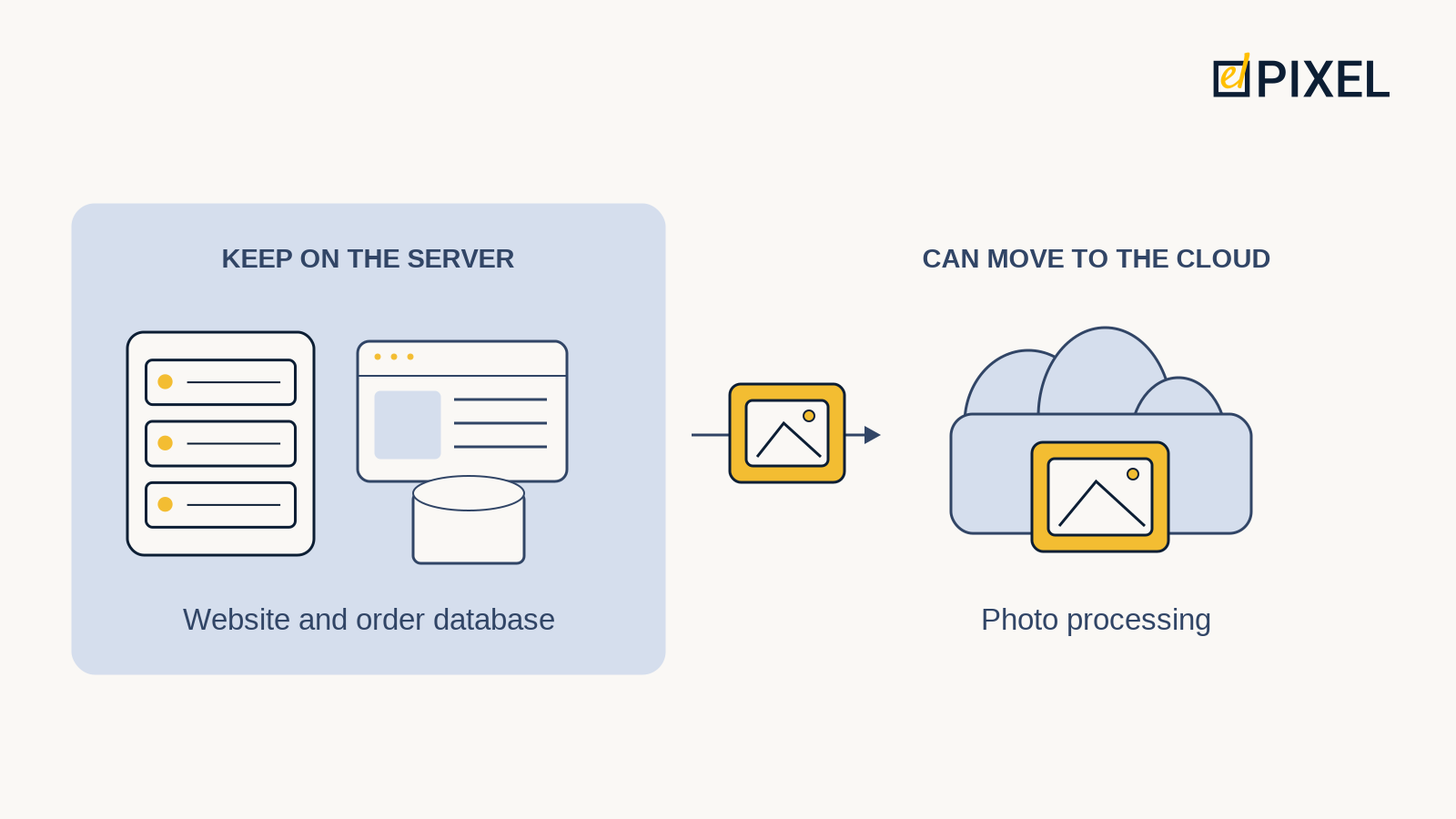
The same service might have a website describing the classes and providing contact details. A contractor maintains it and may access the website code, while the company wants to keep the customer application’s code private. That affects how the repositories should be divided.
In GitHub’s standard access model, read permission applies to the repository. If a contractor can access the shared repository, they can read the other code folders too. Assigning owners to folders helps organise code reviews; read access still applies at repository level. See the GitHub documentation on repository roles for details.
Separate repositories allow permissions to be set independently for the website and the application. The team can keep the application and its server-side code together while leaving the website in its own repository.
There is also a simpler reason to separate them. If the service’s website only contains class descriptions and contact details, its pages rarely change alongside the rescheduling feature. Under those conditions, the move offers little benefit: the shared setup would need maintenance, while there is hardly any work requiring joint changes.
What the cost of the move includes
Along with moving files, the cost includes checks: automated tests that run when changes are made and look for problems, and manual testing. The team determines what to check for a particular change. In the booking example, that means being able to choose another time and save it on the server.
The same hypothetical service has a customer application and an administrator’s interface where a staff member creates bookings. Both use shared code to calculate the price of a class. A developer changes that code. The team needs to check the applications whose behaviour is affected, even if their own files have not changed. The calculation may be correct while an application passes it the wrong data, so the applications need checking too.
Checking the whole product after every small change adds waiting time. A new label on a screen may wait for results unrelated to it. The technical team determines the necessary checks, sets them up and assigns responsibility for maintaining them as the service develops.
The estimate therefore needs to allow time for moving files, setting up checks and maintaining them. A monorepo has other considerations too. For example, checks may take longer as the amount of code grows.
A good sign is that a related task that previously involved lengthy coordination between two changes can be prepared noticeably faster after the move. It is worth recording how long that coordination takes before work begins, so there is something to compare the result with. The time spent maintaining checks should not exceed the time saved.
The application and server can be released separately
After the move, the customer application still sends requests to the server, which processes the customer’s actions. They are two programs. In the booking service, one shows the new time selector; the other saves the result.
Teams can update the application and server on different days if their versions are compatible.
For a web application, consider this possibility: a customer opened the booking page before an update and left the tab open. The server has been updated, but the page still sends requests according to the old rules. If the server stops accepting those requests, rescheduling from that tab may fail. During such an update, the server therefore needs to keep handling the old requests while open pages still use them.
Agreed rules for communication between the application and server provide compatibility. It does not depend on where the code is stored. Different release dates are possible with both shared and separate repositories.
If the team proposes changing how the application and server exchange data alongside the move, ask for that work to be estimated separately. The proposal includes both moving code and changing the product’s design.
Sometimes code storage is not the issue. If developers are waiting for your decision on product rules or priorities, moving the code will not speed that up.
What to ask before agreeing
- Which recent task would shared code storage have simplified, and how?
- Who will set up the necessary checks and maintain them as the product develops?
- Which contributors must not see all the code, and how will permissions be set?
- How long will the move take, what does the setup include, and what ongoing maintenance will be needed?
- Will the application and server retain separate releases, and how will the team check version compatibility?
- Which tasks will we use to compare results before and after the move?
A monorepo makes sense when related changes become easier to prepare and check, and the maintenance costs and access rules suit the company. If the current arrangement already supports that work, it can stay.
If the team’s answers remain unclear, you can discuss the product’s architecture and how to organise the teams’ work with EL Pixel. Use the contact form to describe which parts of the product different teams develop and which tasks require them to change code together.